

Protecting Staff and Patients: Understanding and Addressing Hidden Health Hazards in Dental Practices

Hospitals and healthcare clinics are an obvious source of potential airborne hazards, but busy clinical environments such as dental practices and dental schools involve a wide range of procedures and materials that may present exposure risks to staff and patients. Although many hazards are known, hidden or less visible ones can have serious health implications if they remain unchecked. Drawing on decades of ventilation and occupational hygiene experience, IOM’s workplace protection team shared their view.
Why being safe is the only option
Highlighting and understanding these risks is critical to the running of any dental practice. Repeated or prolonged exposure to chemical, biological, and physical agents can compromise the health and safety of staff and patients. Identifying these risks early aims to ensure that practices are:
What are the risks?
To be protected you need to understand what the risks are.
Nitrous oxide, a well documented hazard in dental practices, is typically released when administered to patients. Dental staff can be exposed if masks are fitted poorly, there are delivery system leaks or if room ventilation is inadequate. This exposure can lead to headaches, fatigue and reduced cognitive performance.
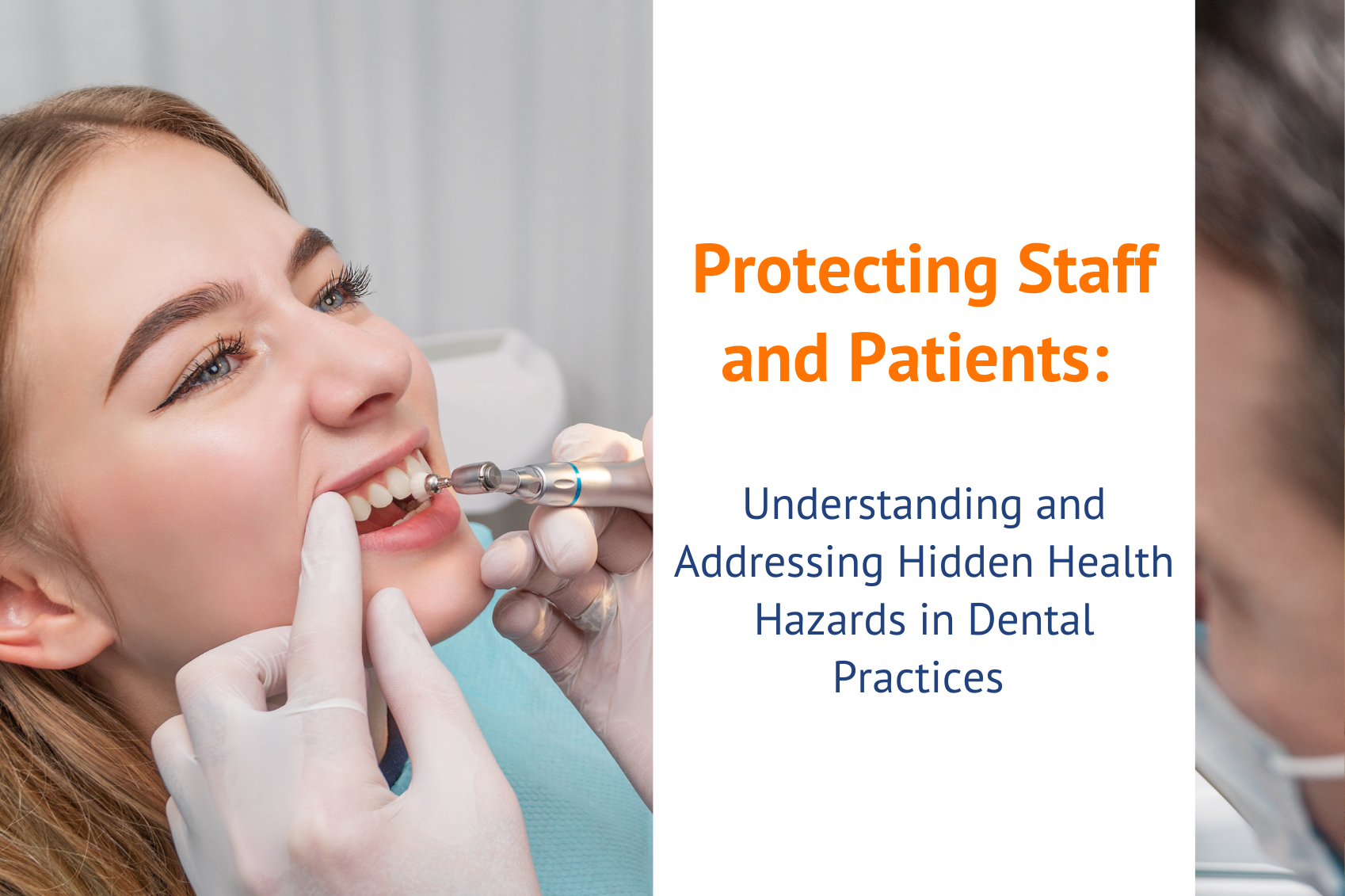
Less recognised are the risks from routine treatments using high-speed hand tools, ultrasonic scalers and air–water syringes. These often generate bioaerosols, tiny particles of saliva, blood, microorganisms and cellular debris. In poorly ventilated treatment rooms, these particles can linger in the air and repeated exposure increases the risk of respiratory infections.
Dental procedures such as grinding, polishing, or cutting teeth and restorations also produce airborne hazards. Inhalation may increase the risk of occupational asthma, chronic bronchitis and other respiratory conditions.
Chemical products used in practice including disinfectants, bonding agents, resins, solvents and methyl methacrylate, release volatile organic compounds (VOCs). In spaces where ventilation is insufficient or air quality is poor, these can accumulate and cause short-term irritation of the eyes, skin and respiratory tract, as well as headaches or dizziness. Repeated exposure may lead to occupational asthma and detrimental central nervous system effects.
Using high speed hand tools creates a high risk of noise and hand arm vibration exposure. This can lead to hearing loss or, as is the case with vibration exposure, numbness, muscle weakness and loss of dexterity.
Two additional but hidden risks come from dental amalgam and conducting root canals. Handling, removing, or polishing amalgam releases mercury vapour, which can be inhaled as it vaporises at room temperature. Similarly, sodium hypochlorite used during root canal cleansing can pose a risk. Without adequate ventilation or proper waste management, prolonged low-level exposure may lead to neurological or kidney effects.
The impact of these exposures mean that staff are at risk if the proper measures aren’t implemented. This can result in in poor performance and risk of pain when carrying out routine tasks, as well as leading to increased practice sick leave and even regulatory fines or interventions.
Are there any specific risks facing students and dental schools?
With students being transitory and working in the dental environment on an irregular basis there is a risk that safety precautions and assessments are not part of a regular routine . This in turn can create a greater degree of potential exposure to hazards, whilst tutors and support staff who are there for extended periods are subject to prolonged exposure. A busy learning environment also means that ventilation designed for a higher number of people needs to be in place or risk further exposure and poor air quality. Embedding these measures at training stage helps the next generation of dental practitioners understand and act on workplace protection in their own or employers’ practices once qualified, Regulation Affecting Dentists
In the UK, the Control of Substances Hazardous to Health Regulations (COSHH) requires employers to identify hazardous substances, assess risks and implement a hierarchy of control measures to prevent or reduce exposure. On the physical hazards, hand arm vibration is subject to the Control of Vibration at Work Regulations 2005 and noise exposure is subject to the Control of Noise at Work Regulations of 2005. Whilst any injuries and work related diseases sustained will need to be reported under RIDDOR. Dentists are also subject to guidance from the General Dental Council.
Practical Steps and Recommendations
IOM has been providing healthcare clients with workplace safety expertise for over 55 years. Simple steps, such as opening windows to improve ventilation can reduce exposure to airborne hazards. Keeping tools in good working order and having a rotation of staff can reduce physical exposure too. What is essential is a clear understanding of the risks and a set of comprehensive controls to ensure long-term protection in place. Drawing on IOM’s extensive healthcare experience our Dental Practice Workplace Protection Plans support practices with the following:
For professional and trusted advice on assessing and managing these hazards in your practice, please get in touch with the team at IOM today.